Independent Case Study
01- Project details
This speculative project analyzes how The Ordinary's website could be transcreated for Spanish-speaking audiences.
Rather than translating the original copy word for word, the goal was to preserve the brand's minimalist voice while making the messaging sound natural and native in Spanish.
Challenge
The existing Spanish copy closely follows the English structure, reducing fluency and readability.
Literal translations can make a brand feel less trustworthy.
Target Audience
Spanish-speaking women in the U.S.
Ages 25–45, who value effective skincare, transparent ingredients, and affordable pricing.
Creative Objective
Adapt The Ordinary's homepage copy to sound native in Spanish while preserving its minimalist, science-backed tone.
Original English & Current Spanish Localization
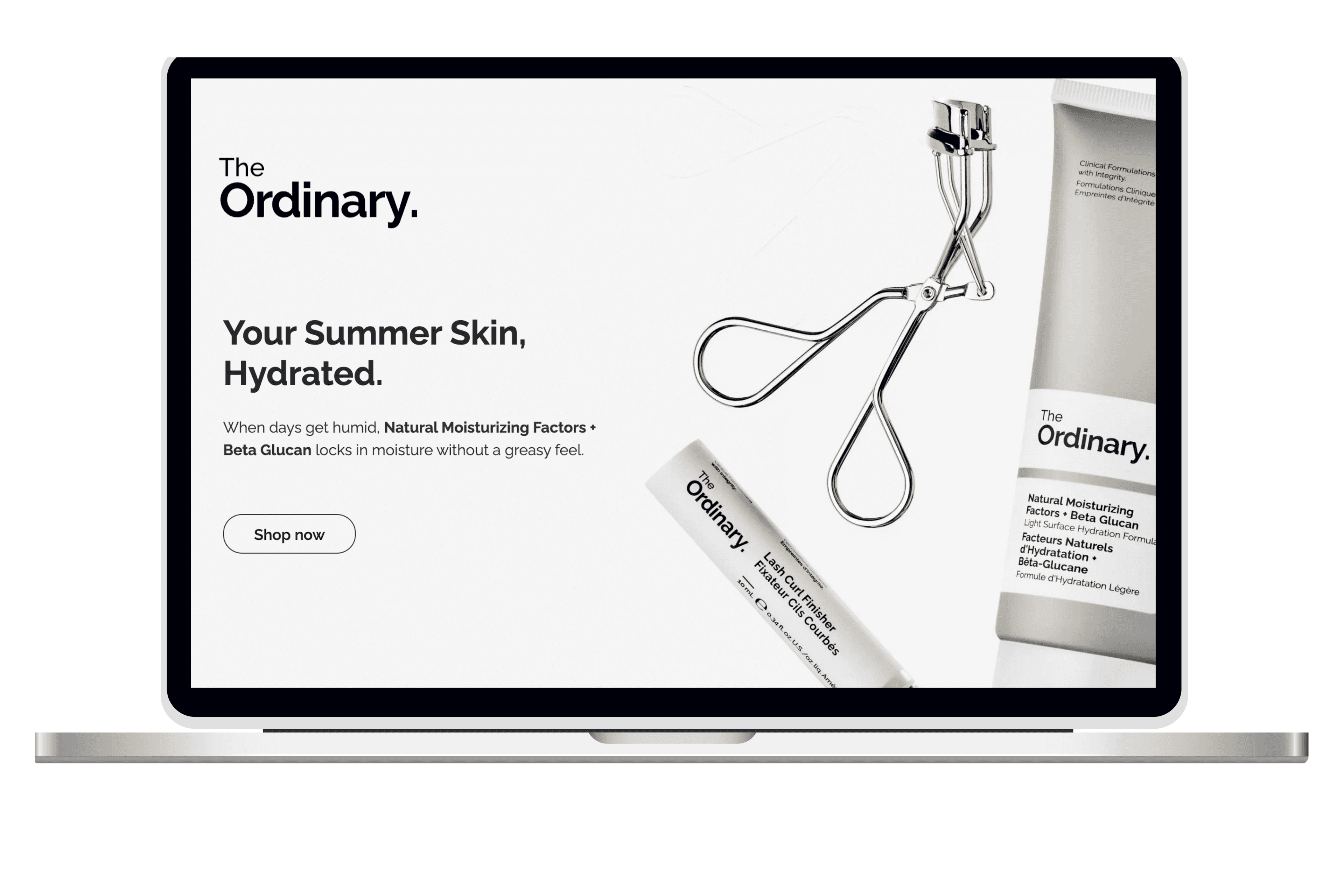
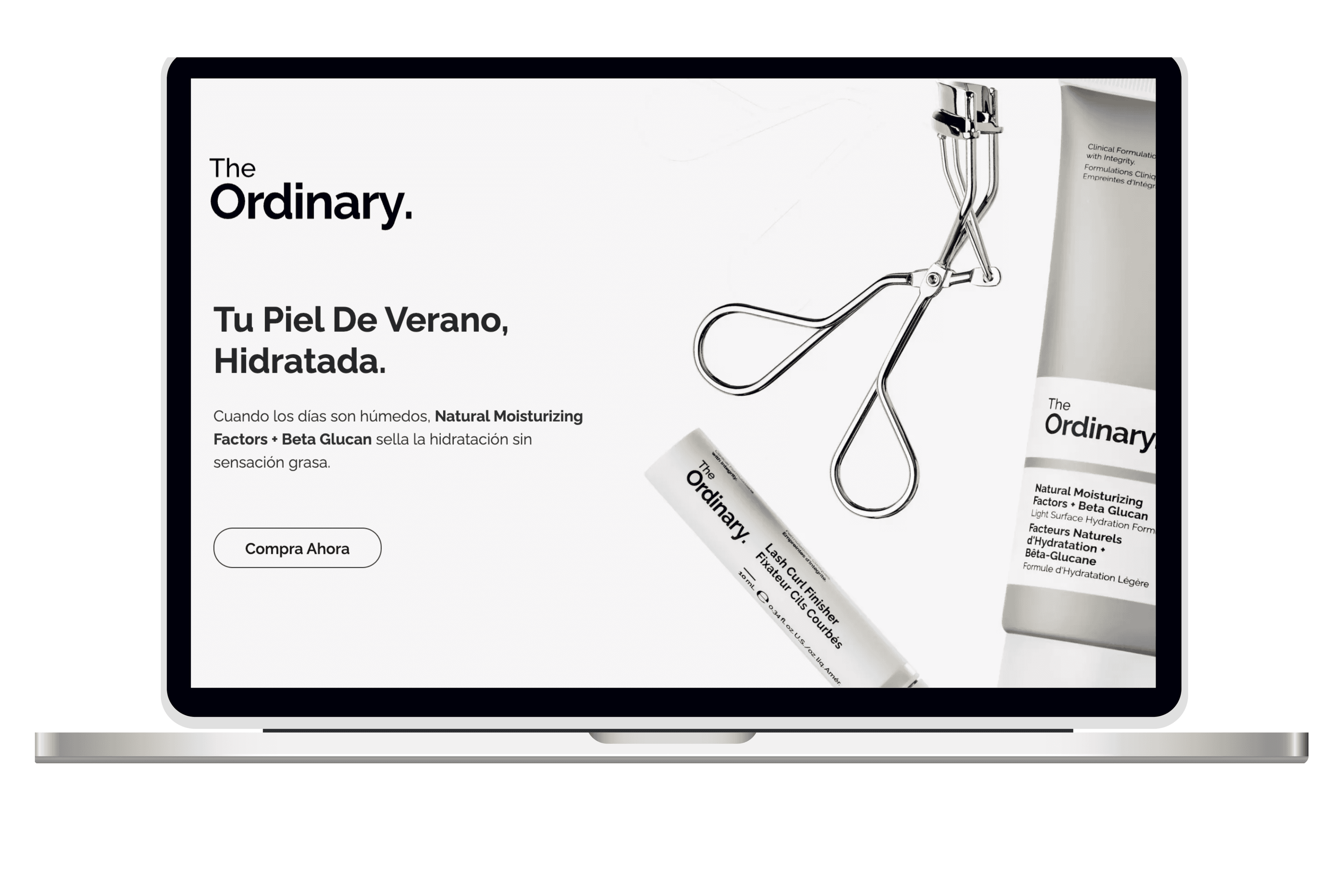
While the current Spanish version is clear, some linguistic choices affect its fluency, creating opportunities to improve natural flow, connection, and alignment with The Ordinary's minimalist brand voice.
My transcreation
02 — Creative process
Headline
Original
Your Summer Skin, Hydrated.
Current Spanish
Tu Piel De Verano, Hidratada.
My Transcreation
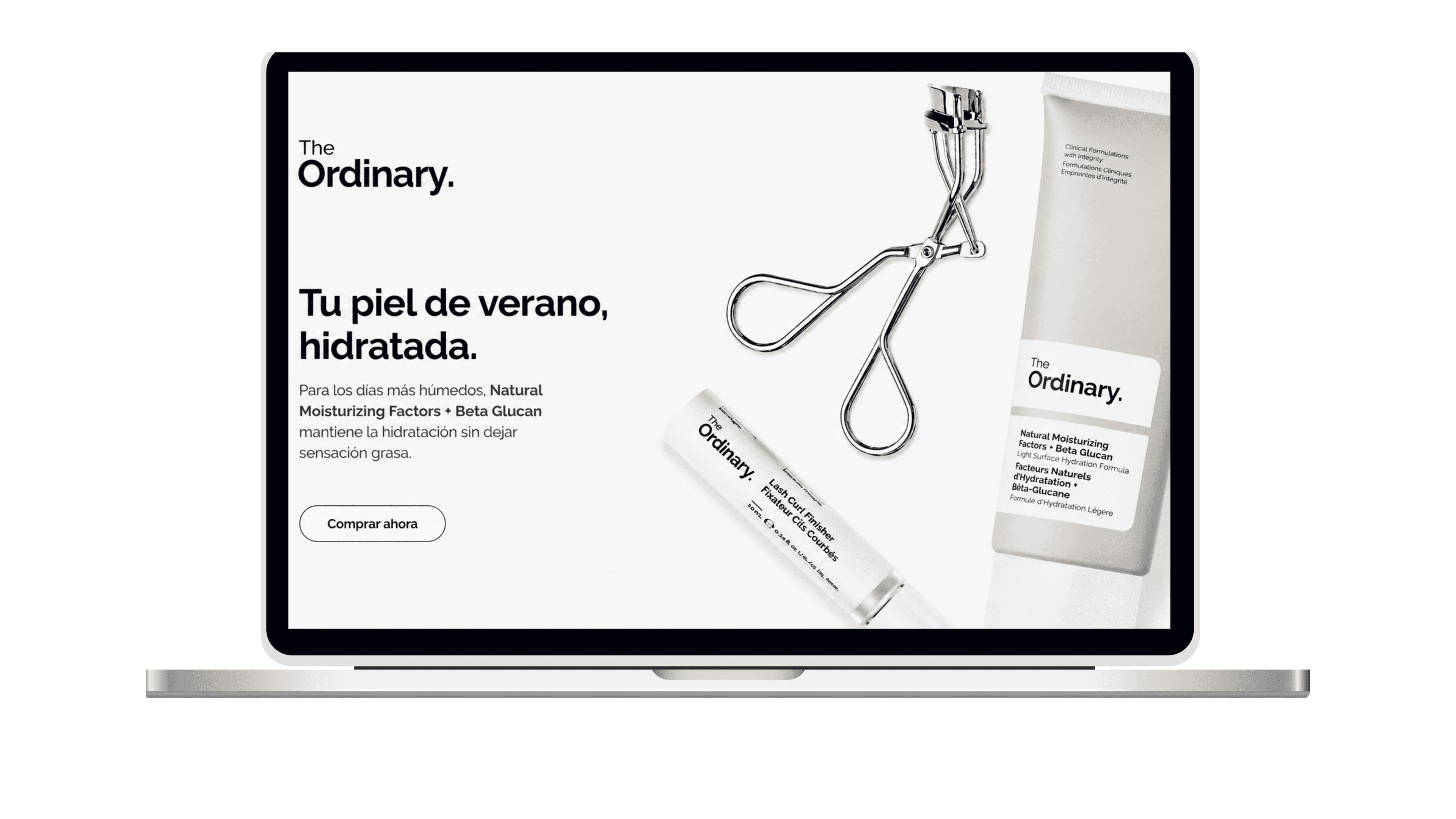
Tu piel de verano, hidratada.
Why
Spanish headlines typically use sentence case rather than title case. Using lowercase after the first word creates a more familiar reading experience and aligns with both Spanish writing linguistics and The Ordinary's minimalist aesthetic
Language Adaptation
Original
When days get humid.
Current Spanish
Cuando los días son húmedos...
My Transcreation
Para los días más húmedos...
Why: "Para los días más húmedos" approaches a conversational tone in Spanish while preserving the original intent, creating a smoother transition into the product benefit.
Language Adaptation
Original
Locks in moisture without a greasy feel
Current Spanish
Sella la hidratación sin sensación grasa.
My Transcreation
Mantiene la hidratación sin dejar sensación grasa.
Why
Replacing "sella" with "mantiene" avoids a literal translation of locks in moisture and feels more familiar to Spanish-speaking readers. Adding "dejar" creates a more fluid sentence that mirrors how skincare brands naturally communicate in Spanish.
Why sentence case?
Unlike English, Spanish headlines generally don't capitalize every major word. Applying sentence case improves readability and makes the interface feel like it was originally designed for Spanish-speaking audiences.
Social Media Transcreation
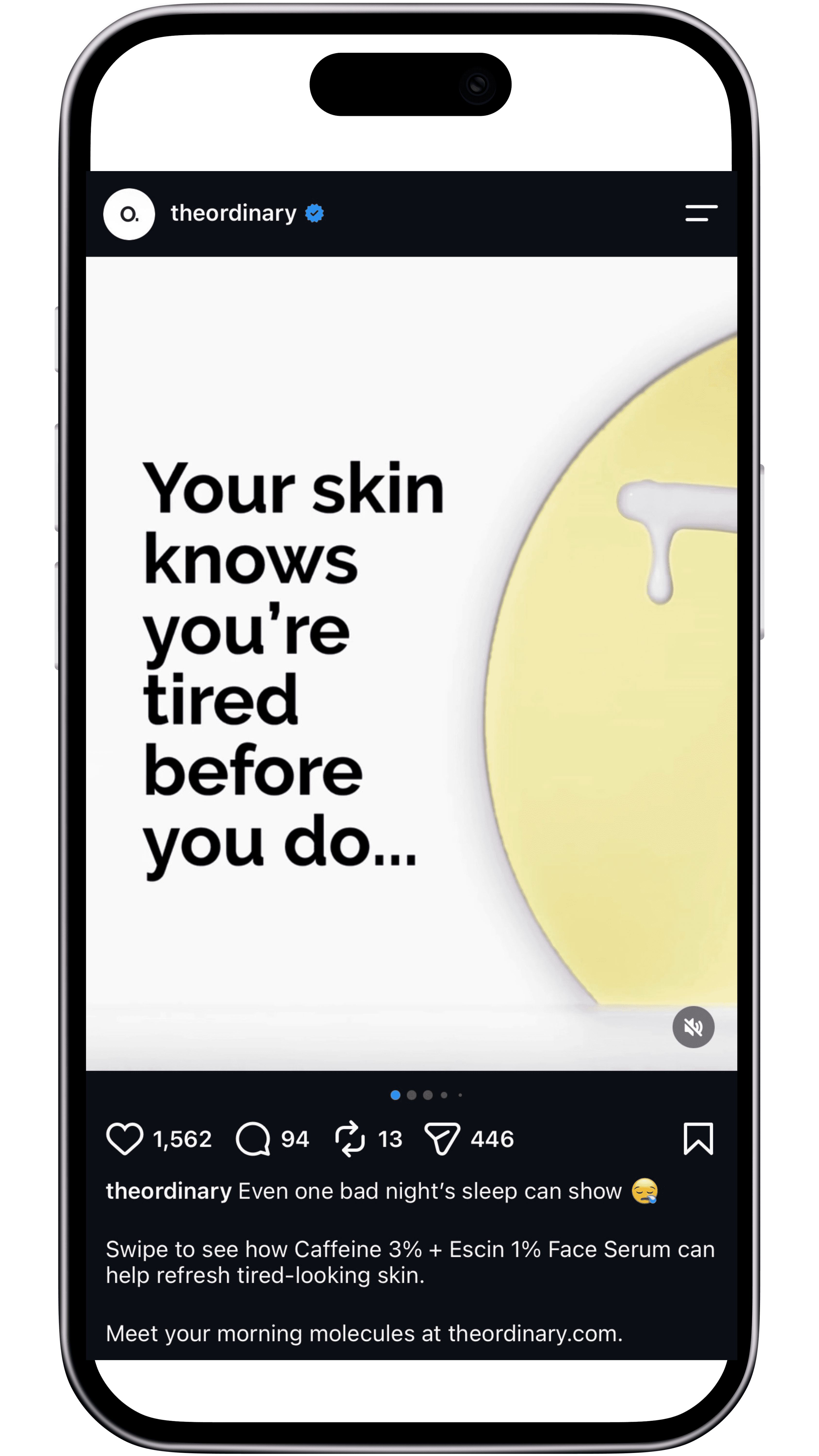
Original Social Media Post
This post was analyzed to preserve its tone while adapting the copy for Spanish-speaking audiences in the U.S.
My transcreation
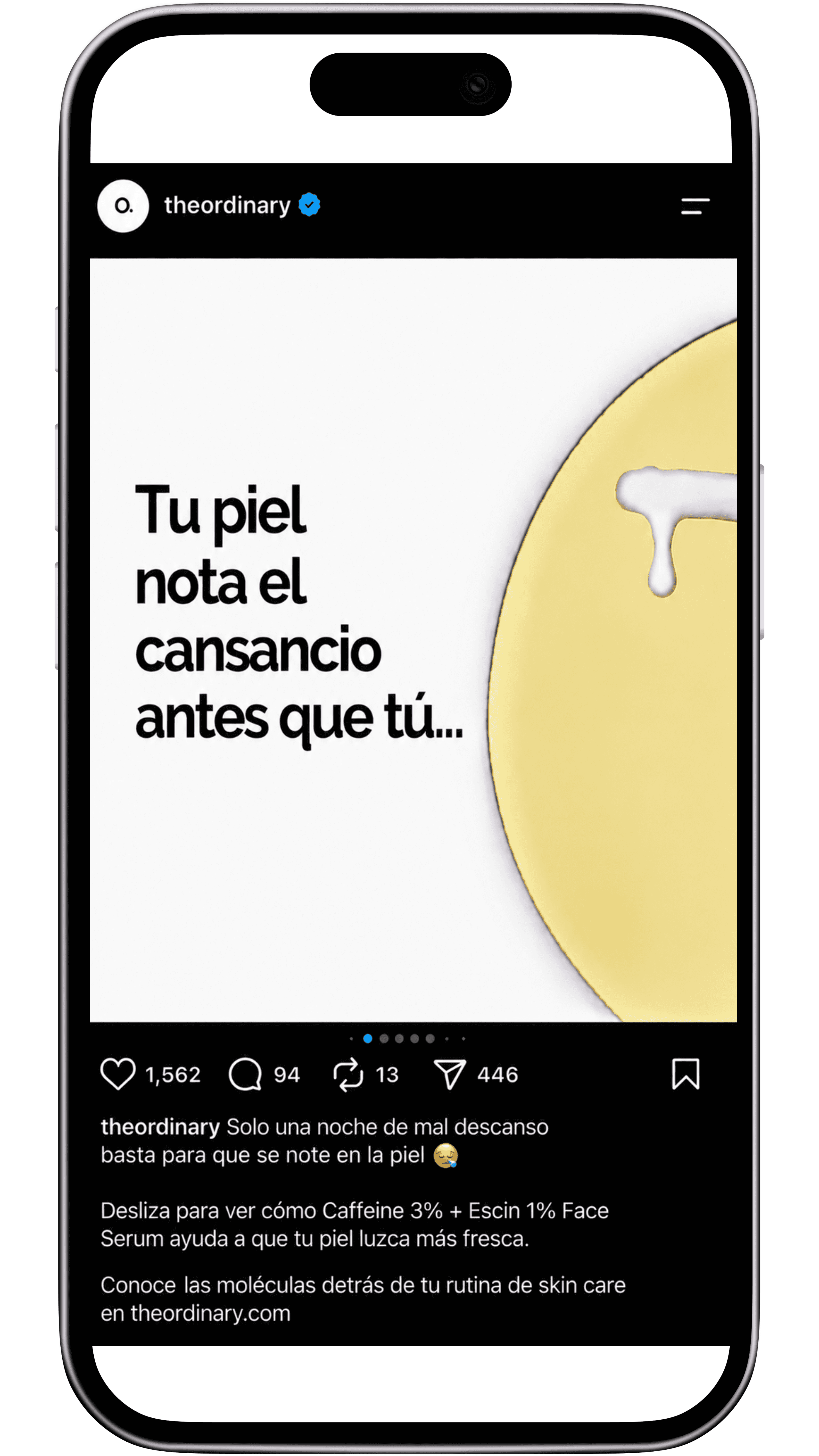
Language Adaptation - Post
Original
Your skin knows you're tired before you do...
My Transcreation
Tu piel nota el cansancio antes que tú...
Why
Instead of translating "you're tired" literally, I shifted the focus to "el cansancio", a term commonly used in Spanish-language beauty and wellness communication.
A literal translation"Tu piel sabe que estás cansada antes que tú" is grammatically correct, but el cansancio better reflects how Spanish-speaking audiences naturally talk about visible signs of fatigue in the skincare industry.
Language Adaptation - Caption
Original
Even one bad night's sleep can show
My Transcreation
Solo una noche de mal descanso basta para que se note en la piel.
Why
The phrase "se note en la piel" was intentionally chosen to align with the headline, creating a consistent message throughout the post. Compared with alternatives such as "se refleje en la piel," se note is natural and conversational in everyday Spanish, creating a more personal, one-to-one tone that speaks directly to the consumer while remaining true to The Ordinary's minimalist voice.
Language Adaptation - Caption
Original
Swipe to see how Caffeine 3% + Escin 1% Face Serum can help refresh tired-looking skin.
My Transcreation
Desliza para ver cómo Caffeine 3% + Escin 1% Face Serum ayuda a que tu piel luzca más fresca
Why
Rather than translating "refresh tired-looking skin" literally, I focused on the desired outcome and benefit. The phrase "luzca más fresca" shifts the focus from describing the skin's condition to highlighting the result consumers want to achieve, making the message more emotionally engaging.
Language Adaptation - Caption
Original
Meet your morning molecules at the ordinary.com
My Transcreation
Conoce las moléculas detrás de tu rutina de skin care en theordinary.com
Why
Keeping the word "moléculas" preserves The Ordinary's science-backed identity while connecting it to the consumer's skincare routine. The term "skincare" was intentionally selected because it has become part of the everyday vocabulary of many Spanish-speaking beauty consumers in the U.S., reflecting the natural use of Spanglish and making the copy feel more authentic and culturally relevant.